

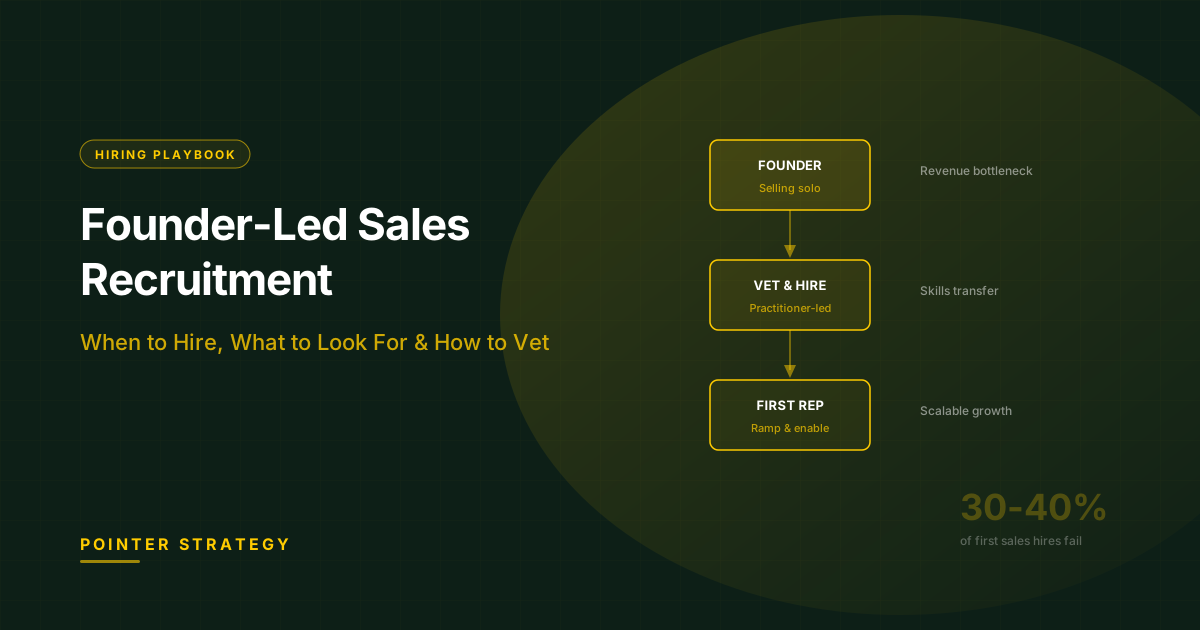
Founder-led sales works until it doesn't. At some point, you become the bottleneck — every deal runs through you, and growth stalls while you're stuck in back-to-back demos. 30-40% of first sales hires fail within the first year, and the cost isn't just the salary. It's the lost pipeline, the damaged customer relationships, and the months of runway burned on someone who couldn't close.
The transition from founder-led sales to your first sales hire is one of the highest-stakes decisions you'll make. Get it wrong and you've burned months of runway on someone who can't close. This guide covers when to hire, what to look for, how to vet candidates, and how to set your first rep up to actually succeed.
What Is Founder-Led Sales Recruitment
Founder-led sales recruitment is the process of hiring your first salespeople after you've personally sold your product. Unlike traditional sales hiring, you're not filling a role with a job description someone else wrote. You're transferring knowledge that only exists in your head — patterns from customer conversations, objection responses that actually work, and the subtle signals that separate real buyers from tire-kickers.
Here's the thing: you can't recruit well for a role you haven't done yourself. Running founder-led sales first gives you the pattern recognition to spot candidates who can actually succeed in your specific environment. Without that experience, you're guessing.
The biggest mistake founders make is treating this like a standard recruitment exercise. It isn't. You're building a sales function from scratch, and the first hire sets the tone for everything that follows.
Signs It's Time to Hire Your First Salesperson
Not every founder should rush to hire. Hiring too early is just as dangerous as hiring too late. Here are the signals that it's genuinely time.
You've Closed Enough Deals to See a Pattern
If you've personally closed 15-25+ deals, you likely have enough data to understand your sales cycle, common objections, and what a good-fit customer looks like. Fewer than that and you're still learning — which means you can't teach someone else how to sell your product.
Revenue is Limited by Your Calendar, Not Your Pipeline
When you have more qualified leads than you can personally work, you've hit the hiring trigger. If the constraint is pipeline generation rather than capacity, you might need marketing or a BDR first, not a closer.
You Can Articulate Your Sales Process
Can you describe, step by step, how a deal moves from first touch to signed contract? If the answer is "it depends" or "I just kind of feel it out," you're not ready. Your first hire needs a repeatable process to follow — even if it's imperfect.
The Opportunity Cost is Real
Calculate what your time is worth. If you're spending 20+ hours per week on sales calls instead of product, fundraising, or strategy, the maths usually favours hiring.
| Signal | Ready to Hire | Not Ready Yet |
|---|---|---|
| Deals closed personally | 15-25+ with clear pattern | Under 10, still experimenting |
| Pipeline status | More leads than you can work | Not enough inbound/outbound |
| Sales process | Documented and repeatable | Ad hoc, varies every deal |
| Founder time spent on sales | 20+ hours/week | Under 10 hours/week |
If you're ticking the "Not Ready Yet" column, that doesn't mean you should do nothing. Programmes like Sell Anything help founders build a repeatable sales process and close their first deals — so that when you are ready to hire, you have real data to recruit against.
What to Look For in Your First Sales Hire
Your first salesperson is not the same profile as your tenth. Here's what actually matters.
Coachability Over Experience
A rep with 10 years at Oracle won't necessarily succeed selling your $30K ARR product to mid-market. What matters more is whether they can learn fast, take feedback, and adapt. The best first hires are curious, humble, and comfortable with ambiguity.
Founder-Friendly Selling Style
Your first hire will be selling alongside you, not replacing you. They need to match your company's tone — if your buyers expect consultative conversations and your hire leads with hard closes, deals will stall.
Full-Cycle Capability
At a startup, there's no SDR to set meetings and no sales ops to clean the CRM. Your first rep needs to prospect, qualify, demo, negotiate, and close. Look for candidates who've done the full cycle, not just one piece.
Commercial Curiosity
The best first hires ask questions about your business model, not just the commission plan. They want to understand unit economics, customer lifetime value, and why customers churn. This signals someone who'll sell strategically rather than just chase quota.
| Attribute | Why It Matters | Red Flag |
|---|---|---|
| Coachability | Must learn your product and market fast | Talks over you in the interview, dismisses feedback |
| Full-cycle experience | No support team at a startup | Only done one part of the sales process |
| Commercial curiosity | Sells strategically, not transactionally | Only asks about comp and quota |
| Ambiguity tolerance | Processes are still being built | Needs rigid playbooks to function |
| Culture fit | Sets the tone for the whole sales team | Great CV but doesn't match your values |
Where to Find Candidates
Your Network First
The best first hires often come through warm referrals. Ask investors, advisors, and other founders who they'd recommend. LinkedIn outreach to reps who sell to your target persona works too — if someone already sells to your ICP, they understand the buyer.
Specialist GTM Recruiters
Generalist agencies won't understand the nuance of a founder-to-first-hire transition. Work with recruiters who specialise in revenue roles and who have actually carried a quota themselves. They'll vet for the right attributes, not just keyword-match CVs.
The GTM Community
Talent shows up in communities before it shows up on job boards. The GTM ANZ Community is where sales professionals in the region learn, share, and connect — and it's a strong sourcing channel for candidates who are actively investing in their own development.
Job Boards (With Caution)
Seek and LinkedIn will generate volume, but volume isn't the goal. The challenge with job boards is signal-to-noise — you'll get hundreds of applications and most won't fit. If you go this route, build a strong screening process to filter fast.
How to Vet Sales Candidates as a Founder
This is where most founders get it wrong. You've never managed salespeople, so you don't know what good looks like in an interview. Here's a practical framework.
Step 1: Scorecard Before You Start
Before you see a single CV, write down the five attributes that matter most for your specific role. Weight them. This prevents you from being swayed by charisma or a polished pitch — both of which are professional skills for salespeople that don't necessarily predict success in your environment.
Step 2: Run a Real Scenario
Give candidates a genuine sales situation from your business. Not a generic role-play — an actual deal you've worked. Describe the prospect, the objection they raised, and ask the candidate how they'd handle it. This reveals thinking process, not rehearsed answers.
Step 3: Check for Discovery Skills
Great sellers ask better questions than they give answers. In the interview, notice: does the candidate ask about your customers, your competitive landscape, your sales cycle? Or do they just pitch themselves? The ones who ask sharp questions will ask sharp questions of your prospects too.
Step 4: Reference Check Differently
Don't just call the references they provide. Ask each reference: *"Would you hire this person again to sell a product they've never sold before, into a market with no brand recognition?"* That's the actual job. Standard references confirm someone was employed. This question reveals whether they can do *your* job.
Step 5: Paid Trial or Project
Consider a short paid trial — one to two weeks where the candidate shadows your sales process, takes on a small project, or runs a few calls with your oversight. It costs a fraction of a bad hire and tells you more than any interview.
Compensation: What to Pay Your First Sales Hire
Getting compensation wrong either prices you out of good candidates or burns cash on someone who's motivated by the wrong things.
Base Salary Ranges (Australia 2026)
| Role Level | Base Salary | OTE | Typical Split |
|---|---|---|---|
| Junior AE / first closer | $80,000 - $100,000 | $120,000 - $150,000 | 70/30 |
| Mid-level AE | $100,000 - $130,000 | $150,000 - $200,000 | 60/40 |
| Senior AE | $130,000 - $160,000 | $200,000 - $260,000 | 55/45 |
Use our OTE calculator to model different base/variable splits and see how they affect total cost. For a deeper dive on structuring sales compensation in the APAC market, see our [sales compensation guide](/guides/sales-compensation-apac).
Equity Considerations
If you can't match market base salaries, equity can close the gap — but only if you explain the potential value clearly. Early employees at well-funded startups can see significant returns, but candidates have heard that pitch before. Be transparent about valuation, dilution risk, and vesting schedules.
Commission Structure for a First Hire
Keep it simple. A percentage of closed revenue (typically 8-12% of first-year ACV) with clear accelerators above quota. Avoid overly complex structures with clawbacks and multi-tier kickers — your first rep needs to understand exactly how they get paid from day one.
Setting Your First Rep Up to Succeed
Hiring is half the battle. The other half is making sure they don't fail in the first 90 days.
Document Everything Before They Start
Write down your sales process, common objections and responses, ideal customer profile, competitive positioning, and pricing logic. Even rough notes are better than nothing. Your first hire will spend their first two weeks trying to extract this knowledge from your head — make it easier for both of you.
Structured 30-60-90 Day Plan
| Period | Focus | Success Metric |
|---|---|---|
| Days 1-30 | Learn the product, shadow founder calls, study closed deals | Can run a demo independently |
| Days 31-60 | Start taking discovery calls, work own pipeline | First qualified opportunities created |
| Days 61-90 | Full-cycle selling with founder coaching | First deal closed or in advanced negotiation |
Ride-Along Period
Spend the first two to four weeks on calls together. Let them observe, then gradually hand over the conversation. This is where knowledge transfer actually happens — not in onboarding docs, but in live selling situations.
Weekly Pipeline Reviews
Set a standing weekly meeting to review their pipeline, discuss stuck deals, and coach on specific situations. This rhythm keeps you close enough to course-correct without micromanaging.
Invest in Enablement
The average sales ramp takes sales cycle length plus 90 days. Without structured enablement, that extends by two or more months. Companies that invest in ongoing coaching and training see faster ramp times and significantly better retention. Structured onboarding improves retention by 82%.
Common Mistakes Founders Make When Hiring Salespeople
Hiring a VP of Sales Too Early
You don't need a sales leader until you have a team to lead. Hiring a VP of Sales as your first sales hire is one of the most expensive mistakes in startup scaling. A VP expects a team, a budget, and a strategy to execute — not a blank canvas and a list of prospects. Start with an individual contributor and hire leadership later.
Optimising for Industry Experience Over Sales DNA
A candidate who sold the exact same product at a competitor sounds perfect on paper. But industry knowledge is learnable; sales instinct is not. Prioritise candidates who demonstrate strong discovery, objection handling, and closing ability — they can learn your vertical in weeks.
No Onboarding Plan
"Here's the CRM login, good luck" is not onboarding. First hires at startups fail most often because they never got the knowledge transfer needed to succeed. Treat the first 30 days as an investment, not a cost.
Setting Unrealistic Quotas
Your first rep won't sell like you do. They don't have founder credibility, years of relationship context, or the ability to make product commitments on the spot. Set a ramp quota that reflects reality — typically 50% of full quota in month two, 75% in month three, and full quota by month four or five. Use our quota calculator to model realistic targets.
Hiring Based on the Interview Performance Alone
Salespeople interview well — it's literally their job. The best interviewee is not always the best seller. Use scorecards, scenario exercises, and trial periods to cut through the performance.
The Real Cost of Getting It Wrong
A failed first sales hire typically costs 3-4x their annual salary when you factor in:
For a $120,000 OTE hire, the total cost of failure can exceed $400,000. This is why the vetting process matters more than speed.
Build Your Sales Team Without the Risk
Finding the right first salesperson when you've never hired one before is genuinely hard. At Pointer, we've helped dozens of founders make this transition — our recruiters have carried quotas themselves and know the difference between a great CV and someone who can actually close in a startup environment.
Every placement includes 12 months of sales enablement and coaching to accelerate ramp. Our 1.5% monthly fee model means you only pay while the hire performs — no upfront fees, no risk if it doesn't work out. And when your GTM team grows beyond sales, we also recruit for partnerships, customer success, and marketing roles.
No pitch deck. Just a conversation about making your first sales hire the right one.