

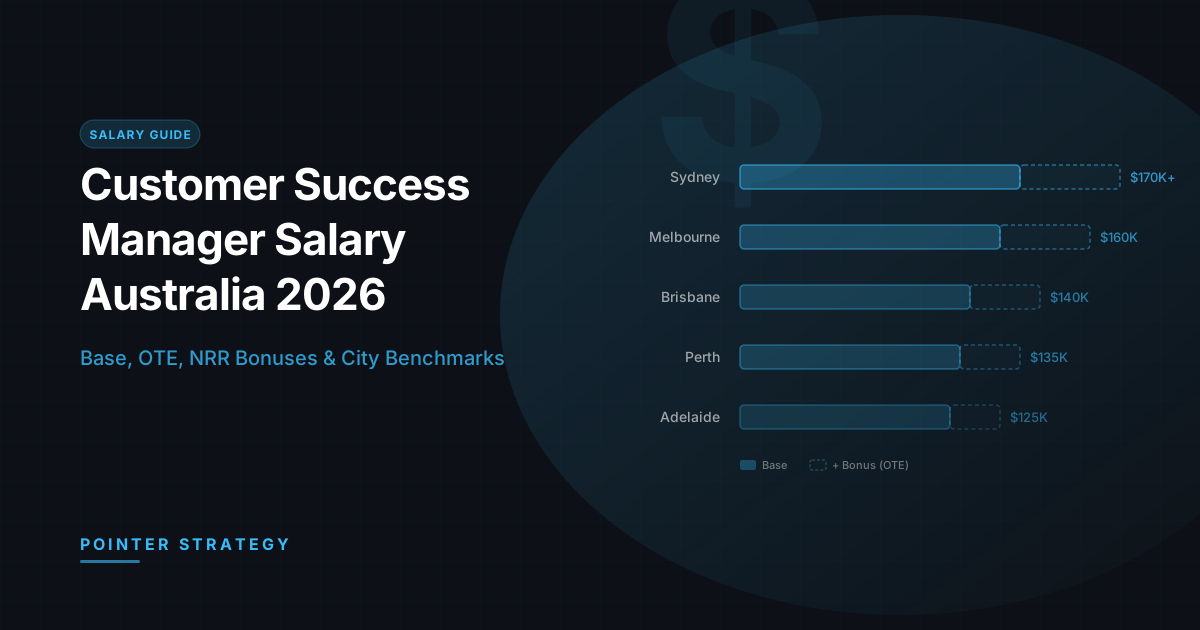
Customer Success Manager salaries in Australia range from $85,000 at entry level to $160,000+ for senior roles, with most CSMs earning between $105,000 and $120,000 base. Add variable compensation, and total on-target earnings typically land between $140,000 and $150,000.
Where you fall within that range depends on experience, location, company stage, and how commercially you approach the role. This guide breaks down salary benchmarks by level and city, explains how OTE and bonus structures work, and covers what actually moves the needle when negotiating.
Average Customer Success Manager Salary in Australia
Customer Success Managers in Australia earn a median base salary between $105,000 and $120,000 per year. When you add bonuses and variable pay, total on-target earnings typically land between $140,000 and $150,000. The full range runs from around $85,000 at entry level to $160,000+ for senior roles at well-funded tech companies.
A quick note on terminology: base salary is your fixed annual pay, guaranteed regardless of performance. OTE (On-Target Earnings) includes your base plus any bonuses or commissions you'd earn by hitting your targets. Most CSM roles at SaaS companies include some variable component, though the exact split varies. Use our OTE calculator to model different base/variable splits.
Sydney and Melbourne pay the most, while smaller cities and regional areas typically sit 10-20% lower. Company stage matters too. A Series B startup might offer $95,000 base with equity, while an enterprise software company could pay $130,000 base with a structured bonus program.
Customer Success Manager Salary by Experience Level
Experience is the biggest factor in where you'll land within the salary range. Here's how pay typically scales as you move up.
Entry-Level
CSMs with zero to two years of experience typically earn $80,000 to $95,000 base. Many people at this level come from support, account coordination, or client services backgrounds, bringing transferable skills but limited CS-specific experience.
At this stage, you're likely managing a high volume of smaller accounts rather than strategic enterprise relationships. Variable pay tends to be modest — often a flat quarterly bonus rather than commission on expansion revenue.
Mid-Level
With two to five years under your belt, base salaries climb to $95,000 to $115,000. You're now running your own book of business, leading QBRs (Quarterly Business Reviews), and owning retention outcomes directly.
Mid-level CSMs who can point to measurable impact on churn or expansion often push toward the higher end. Specialisation starts to matter here too — CSMs with technical product knowledge or experience in high-value verticals like fintech or cybersecurity command premiums.
Senior
Senior individual contributors managing strategic or enterprise accounts earn $115,000 to $145,000 base, with OTE potentially exceeding $170,000. At this level, you're influencing product decisions, managing executive relationships, and driving significant expansion revenue.
The gap between "senior CSM" and "strategic CSM" or "principal CSM" varies by company. The common thread is commercial impact — senior CSMs who consistently deliver strong NRR numbers have real negotiating leverage.
Leadership Roles
Head of CS, Director, and VP roles represent a significant jump, typically $150,000 to $220,000+ in total compensation. The premium reflects people management, strategic ownership, and accountability for department-wide metrics.
Leadership comp often includes equity, particularly at growth-stage companies. A VP of Customer Success at a Series C SaaS company might have a package worth $250,000+ when equity is factored in. For a full breakdown of leadership compensation, see our customer success compensation guide.
Customer Success Manager Salary by City
Location still influences pay, though remote work has compressed some differences.
| City | Base Salary Range | Notes |
|---|---|---|
| Sydney | $100,000 - $140,000 | Highest concentration of tech HQs |
| Melbourne | $95,000 - $130,000 | Strong SaaS ecosystem |
| Brisbane | $85,000 - $115,000 | Growing tech presence |
| Perth | $85,000 - $110,000 | Smaller market, fewer roles |
| Adelaide | $80,000 - $105,000 | Emerging but limited |
Sydney
Sydney commands the highest CSM salaries in Australia. Most enterprise SaaS companies with APAC operations base their CS teams here, and the cost of living pushes compensation up accordingly.
If you're targeting top-tier pay, Sydney offers the most opportunities. Competition for senior roles is fierce, though.
Melbourne
Melbourne's SaaS scene has matured significantly, with salaries now approaching Sydney levels for comparable roles. The city hosts a strong mix of homegrown tech companies and international players.
Many CSMs find Melbourne offers a better balance: competitive pay with slightly lower living costs.
Brisbane
Brisbane's tech sector is growing — Queensland crossed $504 million in startup funding in 2025 — and CSM roles are becoming more common. Salaries typically run 10-15% below Sydney, though some companies pay location-agnostic rates for remote workers.
Perth and Adelaide
Fewer CS roles exist in Perth and Adelaide overall, but opportunities pop up in mining tech, resources, and regional enterprise software. Salaries tend to be lower, though reduced competition can mean faster career progression.
Remote Customer Success Manager Salary in Australia
Remote work has changed the salary equation. Some companies pay location-agnostic rates — Sydney-level compensation regardless of where you live. Others adjust pay based on location, which can mean a 10-20% reduction outside major metros.
Before accepting a remote role, clarify the company's compensation philosophy. A "remote-first" company headquartered in San Francisco might pay Australian CSMs significantly more than a Sydney-based company with geo-adjusted rates.
The trade-off is real: remote roles outside major cities often come with lower pay but dramatically reduced living costs. A $95,000 salary in regional Queensland might deliver more purchasing power than $120,000 in Sydney.
Customer Success Manager OTE and Bonus Structures
Total compensation for CSMs increasingly includes variable pay tied to performance. Understanding OTE helps you evaluate offers accurately.
Base Salary vs Variable Compensation
Most CSM roles split somewhere between 80/20 (conservative) and 70/30 (aggressive). A role advertising "$100,000 OTE" with a 70/30 split means $70,000 base plus $30,000 in potential variable pay.
Common Commission Models
CSM variable compensation typically takes one of three forms: quarterly bonuses tied to retention metrics, commission on expansion revenue, or a hybrid combining both.
Companies that treat CS as a revenue function tend to offer more aggressive variable pay, sometimes including commission on upsells and cross-sells. Support-oriented CS teams usually have smaller, retention-focused bonuses.
How NRR Targets Affect Earnings
NRR — Net Revenue Retention — measures how much revenue you retain and expand from existing customers, excluding new sales. An NRR of 110% means your customer base grew 10% through expansion, even before adding new logos.
Increasingly, CSM bonuses tie directly to NRR performance. If your portfolio target is 105% NRR and you hit 115%, you might earn accelerated commission. This shift reflects the industry's recognition that CS drives revenue — existing customers generate 40% of new ARR at B2B SaaS companies — not just satisfaction scores.
What Factors Influence Customer Success Manager Pay
Beyond experience and location, several factors explain why two CSMs with similar backgrounds might earn vastly different salaries.
Company Size and Funding Stage
Startups often can't match enterprise base salaries but compensate with equity that could be worth multiples of the salary difference — or nothing at all.
Industry and Vertical
Fintech, cybersecurity, and enterprise infrastructure companies consistently pay above market. They're selling complex, high-value products where customer retention directly impacts company valuation.
SMB-focused SaaS and non-tech industries typically pay 15-25% less for comparable roles. The exception: highly regulated industries like healthcare tech, where domain expertise commands premiums.
Segment Focus and Book Value
"Segment" refers to the size of customers you manage — SMB (small business), mid-market, or enterprise. Enterprise CSMs managing accounts worth $500,000+ in ARR typically earn more than those managing hundreds of smaller accounts.
The logic is straightforward: losing a $1M enterprise account hurts more than losing ten $10,000 accounts.
Skills and Certifications
Technical product knowledge, commercial acumen, and methodology expertise all increase earning potential. CSMs who can speak credibly with technical stakeholders and identify expansion opportunities command premiums.
Revenue-focused CSMs — those who think in terms of NRR, expansion pipeline, and churn prevention — consistently out-earn relationship-focused CSMs who prioritise satisfaction scores alone.
Customer Success Manager vs Similar Roles
Role titles in customer-facing functions overlap significantly. Here's how CSM compensation compares.
| Role | Primary Focus | Typical Pay vs CSM |
|---|---|---|
| Customer Success Manager | Retention & expansion | Baseline |
| Account Manager | Renewals & upsells | Similar or +10% |
| Account Executive | New business sales | +20-40% OTE |
| Support Manager | Issue resolution | -15-25% |
Customer Success Manager vs Account Manager
The distinction blurs at many companies. Generally, Account Managers carry harder revenue quotas and focus on commercial outcomes, while CSMs emphasise customer outcomes that lead to retention. AMs often earn slightly more due to direct revenue accountability.
Customer Success Manager vs Account Executive
AEs typically have higher OTE but more variable income — a 50/50 or even 40/60 base/variable split isn't unusual. CSMs trade some upside for stability. AEs also face more income volatility and quota pressure. For a comparison of sales comp structures across APAC, see our sales compensation guide.
Customer Success Manager vs Support Manager
Support roles focus on reactive issue resolution; CS focuses on proactive value delivery. This distinction drives a meaningful salary premium — typically 15-25% — for CS over support management.
Customer Success Manager Career Path and Salary Progression
CS offers clear progression paths, whether you prefer individual contribution or people management.
Individual Contributor Track
The typical IC progression runs CSM > Senior CSM > Principal/Strategic CSM. Each step brings a 15-25% salary increase, with Principal CSMs at top companies earning $150,000+ base.
Strategic CSMs often manage a small number of high-value accounts and operate as trusted advisors to executive stakeholders.
Management and Leadership Track
The management path typically runs Team Lead > CS Manager > Director > VP/Head of CS. Leadership roles can double or triple IC compensation, though they require different skills — coaching, hiring, cross-functional influence.
How to Negotiate Your Customer Success Manager Salary
Negotiation is expected. Here's how to approach it effectively.
1. Research Market Benchmarks
Use multiple data sources — Glassdoor, Seek, RepVue, and conversations with peers. Understand where your experience, skills, and target company sit within the market before naming a number.
2. Quantify Your Revenue Impact
Calculate your contribution to retention, expansion, and churn prevention in dollar terms. "I managed $2M ARR with 115% NRR" is more compelling than "I had strong customer relationships."
3. Frame Around NRR and Expansion
Position yourself as a revenue driver, not a relationship manager. Companies pay more for CSMs who think commercially and can articulate their impact on metrics that matter.
4. Negotiate Beyond Base Salary
If base salary is fixed, explore other levers:
What Employers Should Budget for Customer Success Hires
If you're hiring CSMs, salary is just the starting point. Total cost includes superannuation (12%), benefits, tools, and the cost of ramp time.
The real expense isn't the recruitment fee or the salary — it's the four to seven months of underperformance while a new CSM learns your product, builds relationships, and reaches full productivity. Underpaying leads to turnover, which restarts that expensive cycle.
Companies that invest in structured onboarding and ongoing enablement see faster ramp times and better retention outcomes. For a deep dive on structuring CS compensation that retains top talent, see our CS compensation benchmark guide.
Hire Customer Success Talent That Drives Revenue
Finding CSMs who can actually move NRR — not just maintain relationships — requires evaluating candidates differently. At Pointer, we vet CS candidates on retention outcomes, expansion capability, and proactive churn prevention, not just soft skills and culture fit.
Every placement includes 12 months of cross-functional enablement to accelerate ramp and drive measurable revenue impact. Our 1.5% monthly fee model means you only pay while the hire performs — no upfront fees, no risk if it doesn't work out.
No commitment. No pitch deck. Just a conversation about building a CS team that protects and grows your revenue.